Introduction
In an era where efficiency and performance are critical, understanding productivity through measurable data has become essential. Data-driven productivity tracking allows individuals and organizations to identify patterns, optimize workflows, and make informed decisions, contributing to sustained improvement.
Context / Problem
Many professionals struggle with vague assessments of their productivity, relying on subjective feelings or incomplete observations. This often leads to misaligned priorities, wasted time, and stress. Without clear metrics, improving work habits or identifying bottlenecks remains challenging.
What can be measured or tracked
Key productivity indicators include:
- Time allocation: How time is distributed among tasks and projects.
- Task completion rate: Number of tasks completed versus planned.
- Focus duration: Length of uninterrupted work periods.
- Distraction frequency: Number and duration of interruptions.
- Meeting time: Time spent in meetings relative to individual work.
- Output quality: Measurable outcomes like reports, code commits, or deliverables.
- Energy levels: Self-reported or biometric data related to alertness and fatigue.
Quantified Self perspective
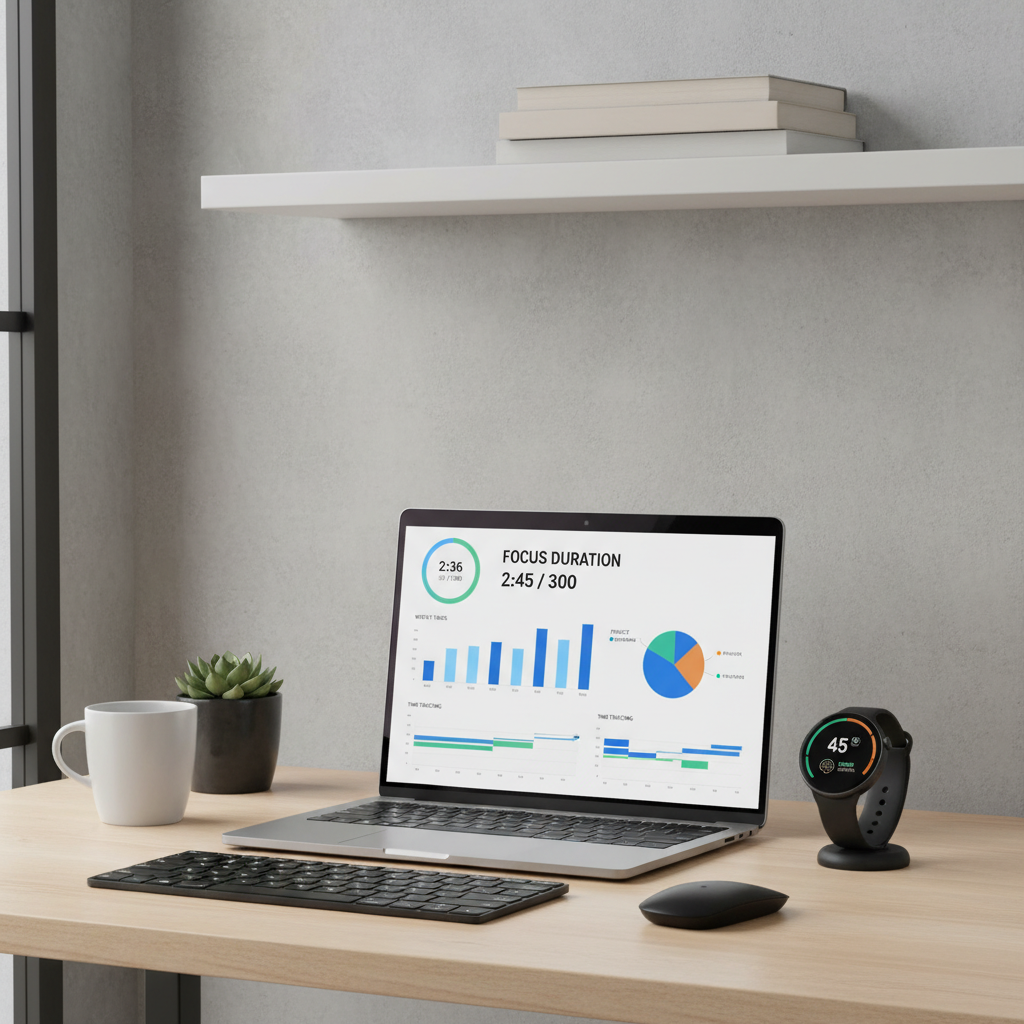
From a Quantified Self viewpoint, tracking these productivity metrics empowers individuals to build personalized dashboards that visualize their work patterns objectively. Data collection can be automated via software tools, calendar integrations, and wearable devices, enabling continuous monitoring without additional effort. Analysis of this data supports experimentation with different routines or environments to discover optimal conditions for productivity.
Conclusion
Adopting a data-driven approach to productivity tracking transforms subjective impressions into actionable insights. By systematically measuring relevant metrics, individuals gain clarity on their work habits and can implement targeted strategies for improvement. The next step involves selecting the right tools and setting up a consistent tracking routine to leverage these benefits effectively.