Introduction
In contemporary professional and personal environments, optimizing productivity has become a critical goal. With the increasing availability of digital tools, understanding and measuring productivity through data has gained prominence. This article explores how a data-driven Quantified Self approach can facilitate effective productivity tracking.
Context / Problem
Many individuals and organizations struggle with productivity inefficiencies that are difficult to pinpoint without objective data. Traditional methods relying on subjective assessments often fail to provide actionable insights. The lack of measurable productivity indicators leads to inconsistent efforts and unclear priorities.
What can be measured or tracked
Productivity can be assessed through various quantifiable metrics, including:
- Time Spent on Tasks: Detailed logging of hours dedicated to specific activities.
- Task Completion Rates: The number of tasks completed within set deadlines.
- Focus Intervals: Duration of uninterrupted work periods.
- Distraction Frequency: Instances of interruptions or context switching.
- Output Quality: Evaluations or ratings of completed work.
- Energy Levels and Mood: Correlated data from wearable devices measuring physiological states.
These data points provide a holistic view of work patterns and efficiency.
Quantified Self Perspective
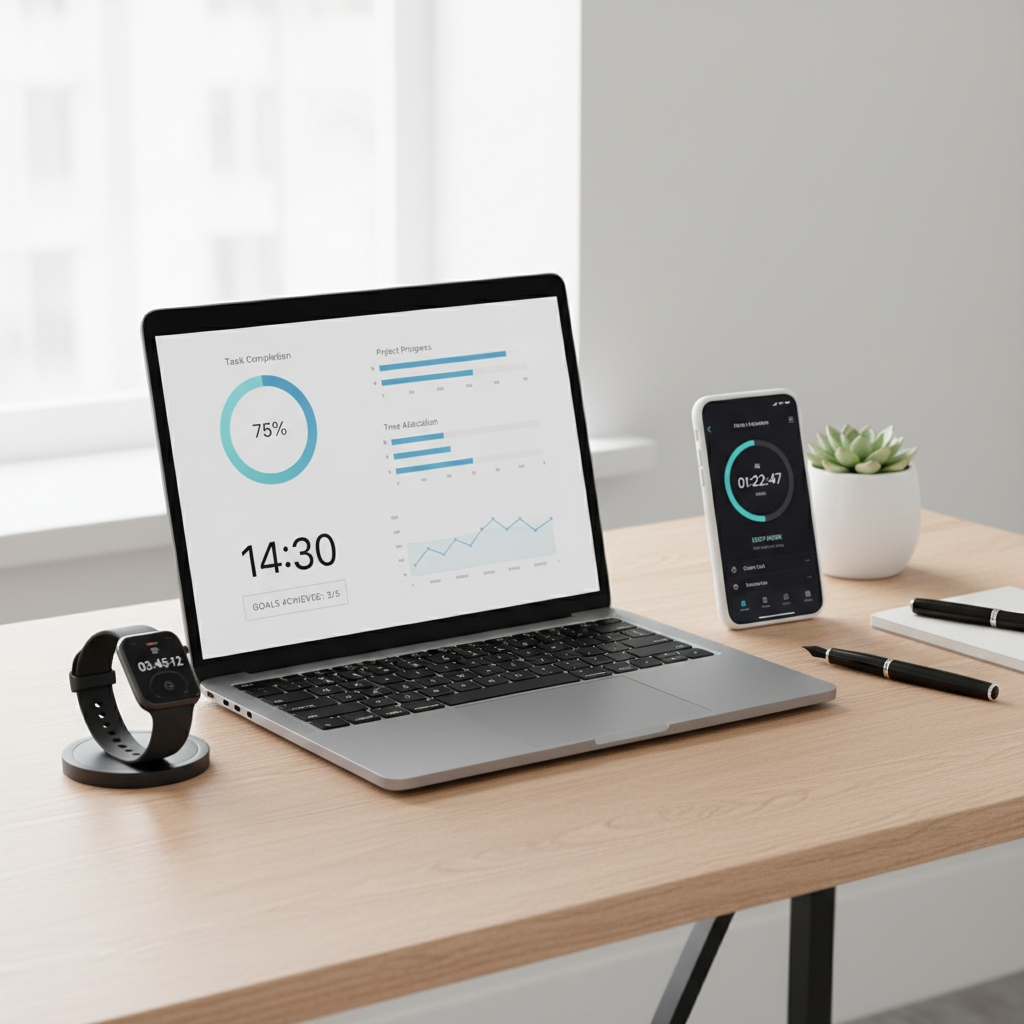
From a Quantified Self standpoint, integrating these metrics into personal dashboards enables continuous self-assessment and iterative improvement. Tracking productivity data over time reveals behavioral patterns and contextual factors influencing performance. This empirical approach allows individuals to formulate evidence-based strategies, adjust workflows, and enhance time management. Furthermore, coupling productivity data with health and cognitive metrics supports balanced and sustainable productivity optimization.
Conclusion
Adopting a data-driven Quantified Self approach to productivity tracking empowers individuals to gain clarity on their work habits and efficiency. By systematically measuring relevant productivity indicators, users can make informed decisions to improve focus, manage distractions, and optimize task execution. The next step involves selecting appropriate tracking tools and establishing consistent data collection routines to leverage the full benefits of this analytical method.