Introduction
In today’s fast-paced environment, productivity is a critical factor for personal and professional success. Understanding and improving productivity requires more than just effort; it demands precise measurement and analysis of relevant data points. This article explores how tracking productivity metrics can provide actionable insights for optimizing performance.
Context / Problem
Many individuals and organizations struggle to quantify productivity effectively. Without measurable indicators, it is difficult to identify bottlenecks, prioritize tasks, or evaluate progress. Traditional methods often rely on subjective assessments or vague goals, which limit the ability to implement systematic improvements.
What Can Be Measured or Tracked
Several objective metrics can serve as indicators of productivity, including:
- Task Completion Rate: Number of tasks completed within a set timeframe.
- Time Spent on Activities: Duration dedicated to focused work versus distractions.
- Output Quality: Measurable outcomes such as code commits, reports generated, or sales closed.
- Workload Distribution: Balance between different types of tasks (creative, administrative, strategic).
- Interruptions and Context Switching: Frequency and duration of disruptions impacting flow.
- Energy and Focus Levels: Self-reported or tracked through wearable devices.
Quantified Self Perspective
Adopting a quantified self approach to productivity involves systematic self-tracking using digital tools or manual logs. This data-driven mindset enables:
- Insightful Analysis: Identifying patterns such as peak productivity hours or recurrent distractions.
- Goal Setting and Adjustment: Aligning objectives with measurable performance indicators.
- Behavioral Changes: Implementing habits based on empirical evidence rather than assumptions.
- Continuous Improvement: Iteratively refining workflows and environments to maximize efficiency.
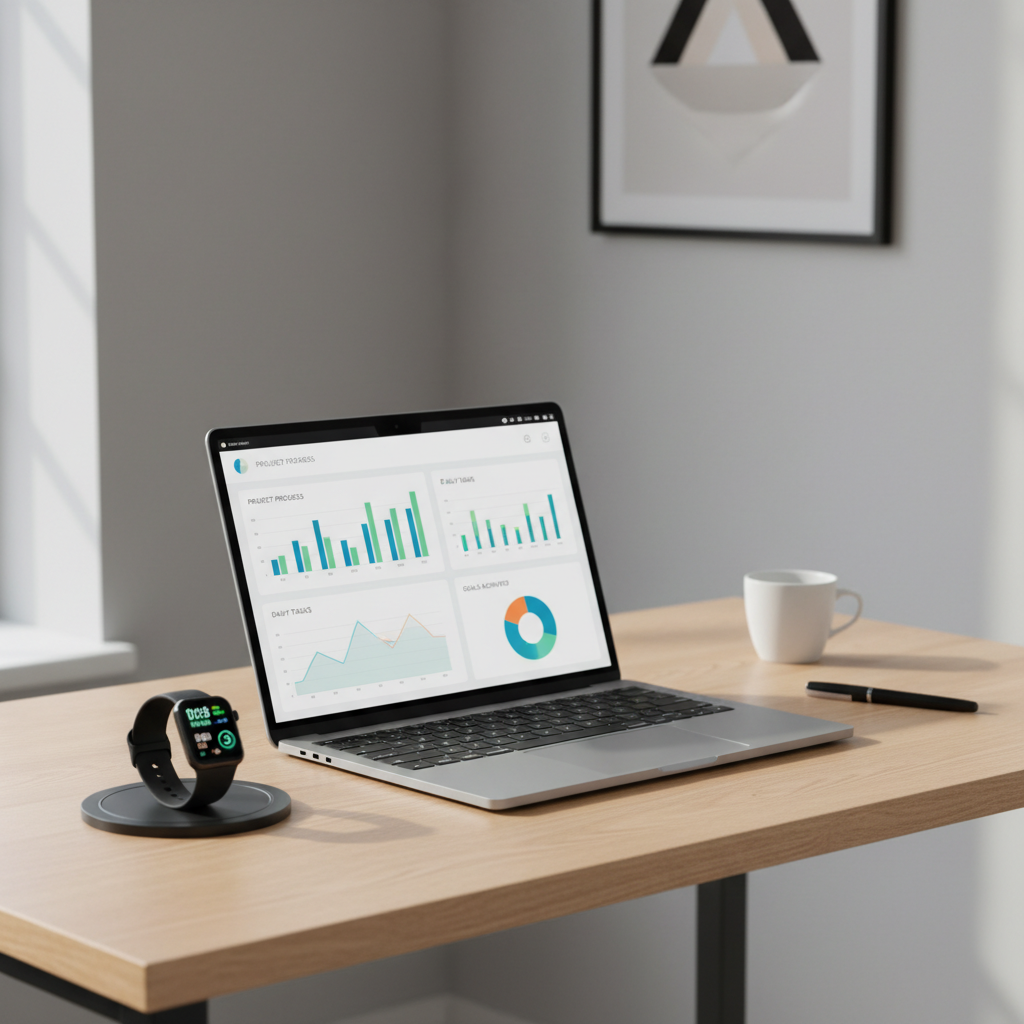
Technology plays a central role, with apps and platforms offering dashboards that synthesize complex data into accessible visualizations. Integration with calendars, task managers, and biometric sensors enriches the dataset for comprehensive evaluation.
Conclusion
Measuring and tracking productivity metrics is essential for anyone aiming to optimize their performance systematically. Through a quantified self framework, individuals can transform abstract goals into concrete data points, enabling precise analysis and informed decision-making. The next step is to select relevant metrics aligned with personal or professional priorities and implement consistent tracking mechanisms to foster continuous improvement.