Introduction
In today's data-centric world, understanding productivity through measurable metrics is increasingly vital. Quantifying productivity helps individuals and organizations optimize performance by identifying patterns and making informed adjustments.
Context / Problem
Many professionals struggle with managing time and tasks effectively due to a lack of clear, objective data on their work habits. Without concrete metrics, productivity assessments are often subjective, leading to inefficiencies and missed opportunities for improvement.
What can be measured or tracked
Key productivity indicators include:
- Time spent on tasks: Measured via time-tracking apps or manual logs.
- Task completion rate: Percentage of planned tasks finished within a timeframe.
- Focus duration: Length of uninterrupted work periods.
- Distraction frequency: Number and duration of interruptions.
- Output quality: Often assessed through peer reviews or objective deliverables.
- Energy levels: Self-reported or tracked via wearable devices to understand peak performance periods.
Quantified Self perspective
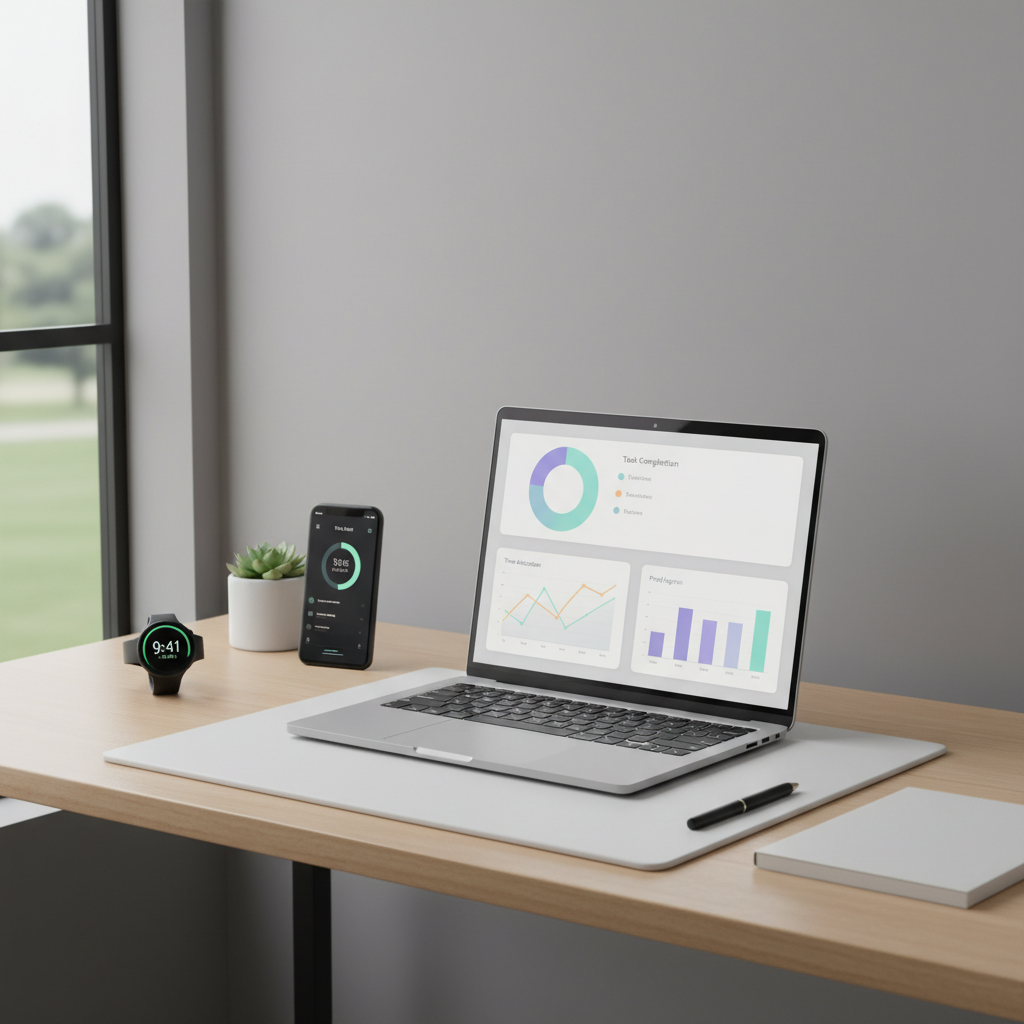
Applying a quantified self methodology to productivity means systematically collecting and analyzing these metrics to uncover behavioral patterns. Dashboards can centralize data visualization, enabling users to detect trends such as peak focus hours or recurring distractions. This data-driven insight facilitates evidence-based adjustments to work routines, task prioritization, and environment optimization.
Conclusion
Measuring productivity through concrete data points allows for an objective evaluation of work habits. Integrating quantified self-tracking tools into daily routines empowers individuals to optimize their performance systematically. The next step involves selecting appropriate tracking technologies and establishing consistent data collection protocols to build a reliable productivity profile.